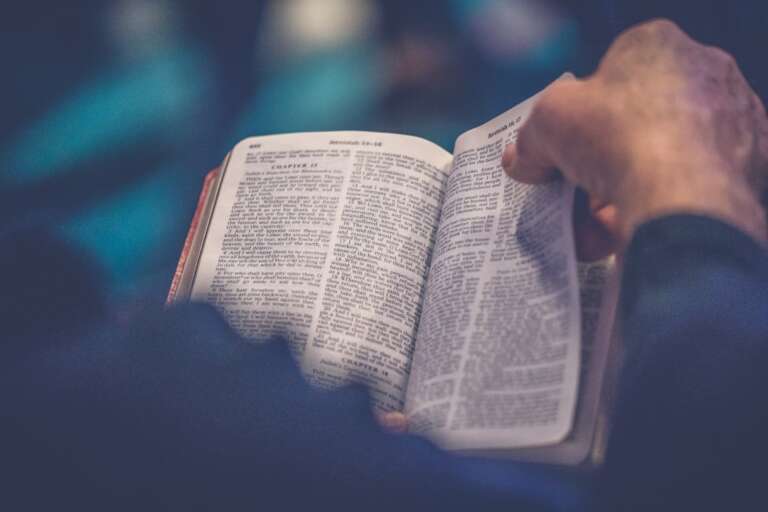
Opening a Bible for the first time – or the hundredth time after years of not reading it – can feel overwhelming. Where do you start? Genesis? The Gospels? The book that falls open randomly? And even when you do start reading, how do you move beyond surface-level familiarity toward genuine understanding that actually changes how you live?
Learning how to study the Bible effectively is one of the most valuable skills a Christian can develop. This guide is designed for beginners – no seminary degree required. Just an open Bible, an honest heart, and a willingness to show up.
Start with the Right Mindset
Before you open your Bible, understand what kind of book it is. The Bible is not a rulebook, a self-help guide, or a collection of moral stories. It is the living Word of God – “God-breathed,” as 2 Timothy 3:16 describes it – meaning it carries a unique authority and power that no other book has.
Hebrews 4:12 says the Word of God is alive and active, sharper than any double-edged sword. Approach it expecting to be taught, corrected, and transformed – not just informed. That expectation changes everything about how you read.
Where to Start if You Are New
Do not start at Genesis 1 unless you plan to read the entire Bible cover to cover (a worthy goal, but a marathon, not a sprint for beginners). Instead:
Start with the Gospel of John. It is written specifically to help readers come to faith in Jesus (John 20:31) and gives you the clearest picture of who Jesus is and what he came to do. Read one chapter per day and ask simple questions: What does this tell me about Jesus? What does it tell me about people? What does it tell me about God?
Then move to Romans. Paul’s letter to the Romans is the most systematic explanation of the gospel in the New Testament. It will give you a theological framework for understanding the rest of the Bible.
Add the Psalms alongside whatever else you are reading. The Psalms cover the full range of human emotion and are a perfect companion for daily devotional reading – they teach you how to pray and how to bring your full, honest self to God.
The Observe-Interpret-Apply Method
One of the most effective frameworks for Bible study is the three-step OIA method.
Observe: What does the text actually say? Read carefully and literally. Who is speaking? Who is the audience? What is the context? What words or phrases stand out? Do not try to apply the text before you have understood what it actually says.
Interpret: What does the text mean? What was the author intending to communicate to the original audience? Context is everything here. A text without a context is a pretext. Look at the surrounding passages, the book as a whole, and how other parts of Scripture address the same theme.
Apply: What does this mean for my life today? How should this passage change what I believe, how I act, or what I value? Application should be specific, not vague. “I should be more loving” is too general. “I will apologize to my colleague tomorrow for how I spoke to him” is an application.
Use Good Tools Without Depending on Them
A good study Bible with notes is an excellent starting point. The ESV Study Bible and the NIV Study Bible are both well-regarded options for beginners. Bible commentaries – written explanations of biblical books by scholars – can be invaluable for difficult passages.
Apps like YouVersion, Logos, and Blue Letter Bible give you access to multiple translations, commentaries, and study tools for free on your phone. The ability to compare translations is especially helpful – seeing how different versions render a passage often illuminates the meaning.
That said, do not let tools replace direct engagement with the text. Read the passage yourself first, think about it, and form your own understanding before reaching for a commentary. The Holy Spirit is given to lead you into truth (John 16:13) – tools supplement that process, they do not replace it.
Build a Consistent Habit
Consistency matters more than intensity. Reading your Bible for ten minutes every day will produce more spiritual growth than reading for two hours once a week. The goal is a daily rhythm that is sustainable, not impressive.
Pick a specific time and place. Keep your Bible and a journal in that spot. When you sit down, start with a brief prayer asking God to open your eyes to what he wants to show you (Psalm 119:18 is a beautiful model for this). Then read. Then reflect and write. Then pray your response.
You will have days when the Bible feels dry and days when a single verse stops you in your tracks. Both are normal. Keep showing up. The transformation happens over time, not in a single sitting.