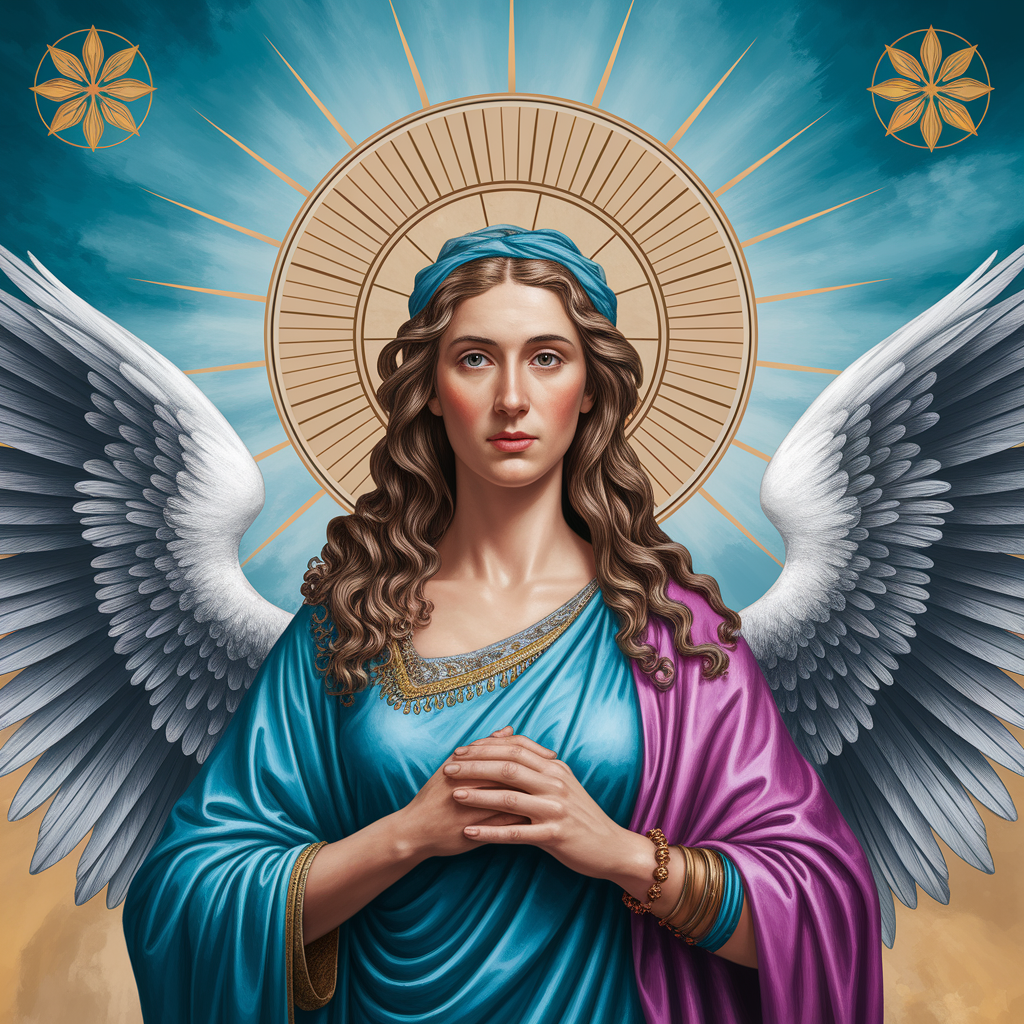
What is the Holy Spirit, and why does He matter so much to the Christian life? He is perhaps the least understood Person of the Trinity, yet He is the One who is closest to us — living within every believer. Jesus called Him the “Helper” (John 14:16), the One who would come alongside His followers after He returned to the Father. Understanding the Holy Spirit transforms your entire Christian life, because it shows you that you were never meant to walk with God in your own strength.

What Is the Holy Spirit? A Biblical Overview
The Holy Spirit is God — the third Person of the Trinity, equal with the Father and the Son in nature, power, and glory. The Bible does not present Him as a distant idea but as a divine Person who acts, speaks, and loves. Christians have long confessed one God in three Persons, and the Spirit is fully part of that one divine being.
Scripture uses several names and pictures for Him: the Spirit of God, the Spirit of Christ, the Spirit of truth, the Helper. Symbols include wind, fire, water, oil, and a dove. Wind speaks of power we cannot control, fire of purifying presence, water of life and cleansing, oil of anointing for service, and the dove of gentleness and peace.
The Holy Spirit Is a Person, Not a Force
The Holy Spirit is not an impersonal energy or divine influence. He is the third Person of the Trinity — He has a mind (Romans 8:27), emotions (Ephesians 4:30), and a will (1 Corinthians 12:11). He can be grieved, quenched (1 Thessalonians 5:19), lied to (Acts 5:3), and blasphemed (Matthew 12:31). He prays, teaches, guides, convicts, and empowers. He is as fully divine as the Father and the Son.
Notice the personal pronouns Jesus uses. In John 16:13 He says that when the Spirit of truth comes, “he will guide you into all the truth.” He does not say “it.” In Acts 5:3-4 Peter tells Ananias that he lied to the Holy Spirit and then says he has lied to God. In one breath the Spirit is identified as a Person and as God.
This matters practically. If the Spirit were only a force, we would try to use Him. Because He is a Person, we relate to Him — we listen, we yield, we thank Him, and we ask forgiveness when we have grieved Him.
The Holy Spirit and the Trinity
The word “Trinity” does not appear in the Bible, but the truth behind it runs through Scripture. At Jesus’s baptism the Son stands in the water, the Spirit descends like a dove, and the Father speaks from heaven (Luke 3:21-22). In Matthew 28:19 Jesus commands His disciples to baptize in “the name of the Father and of the Son and of the Holy Spirit” — one name, three Persons. Paul closes 2 Corinthians with the same pattern (2 Corinthians 13:14).
The three Persons are distinct but never divided. The Father sends the Son, the Son sends the Spirit, and the Spirit points us back to Christ. Jesus said the Spirit “will bear witness about me” (John 15:26). To learn more about the Son He glorifies, read about who Jesus Christ is, His life and teachings.
The Holy Spirit in the Old Testament
The Spirit did not arrive for the first time at Pentecost. He is present at the very beginning, when “the Spirit of God was hovering over the face of the waters” (Genesis 1:2). In the Old Testament He comes upon particular people for particular tasks: He empowered judges such as Gideon (Judges 6:34), filled Bezalel with skill to build the tabernacle (Exodus 31:1-5), and rushed upon David after Samuel anointed him (1 Samuel 16:13).
Yet the prophets looked ahead to something greater. Through Ezekiel God promised to put His Spirit within His people (Ezekiel 36:26-27), and through Joel He promised to pour out His Spirit on all flesh (Joel 2:28-29). What was temporary and selective under the old covenant becomes permanent and available to every believer in the new.
The Holy Spirit in the Life of Jesus
Jesus’s earthly ministry was marked by the Spirit at every step. Mary conceived by the power of the Holy Spirit (Luke 1:35). At the Jordan the Spirit descended on Jesus (Luke 3:22). He was led by the Spirit into the wilderness (Luke 4:1), returned to Galilee “in the power of the Spirit” (Luke 4:14), and read in Nazareth the words of Isaiah: “The Spirit of the Lord is upon me” (Luke 4:18).
If the sinless Son of God lived in dependence on the Spirit, how much more do we need Him? Jesus told His disciples it was to their advantage that He go away, for the Helper would then come (John 16:7).
What the Holy Spirit Does in a Believer’s Life
Scripture describes a rich, many-sided work of the Spirit. Here are six of the most important ways He serves every Christian:
- Regeneration — He brings new spiritual life at salvation (John 3:5-8).
- Indwelling — He lives permanently within every believer (1 Corinthians 6:19).
- Sealing — He guarantees our eternal salvation (Ephesians 1:13-14).
- Sanctification — He progressively transforms us into Christlikeness (2 Corinthians 3:18).
- Gifts — He distributes spiritual gifts for the building up of the church (1 Corinthians 12).
- Intercession — He prays for us when we cannot find words (Romans 8:26-27).
Each work builds on the last. Paul says that all who are led by the Spirit of God are sons of God, and that the Spirit Himself bears witness with our spirit that we are children of God (Romans 8:14-16). That quiet inner assurance is one of His sweetest gifts.
The Fruit and the Gifts of the Spirit
Two related ideas are often confused. The fruit of the Spirit describes the character He grows in us; the gifts of the Spirit describe the abilities He gives us to serve. Galatians 5:22-23 lists the fruit: love, joy, peace, patience, kindness, goodness, faithfulness, gentleness, and self-control. For a deeper study, see our guide to the fruits of the Spirit.
Gifts are described in 1 Corinthians 12:4-11, where Paul explains that there are varieties of gifts but the same Spirit, who distributes them “as he wills” (verse 11). They are given “for the common good” (verse 7), so they are never about status. Character and ability belong together, and character comes first.
How to Walk in Step with the Holy Spirit
Galatians 5:25 says, “If we live by the Spirit, let us also keep in step with the Spirit.” Living by the Spirit is what God has already done in us; keeping in step is our daily response. Here are practical ways to do that:
- Start with surrender. Ephesians 5:18 calls believers to be filled with the Spirit — an ongoing invitation. Begin each day by asking Him to lead you.
- Stay in the Word. The Spirit inspired Scripture, and He delights to illuminate it. Read expectantly and ask Him to apply it.
- Pray without hurry. Romans 8:26 says the Spirit helps us in our weakness. Build a steady rhythm with our tips on developing a consistent daily prayer life.
- Listen for His quiet voice. He convicts, comforts, and guides, always in harmony with Scripture. Learn more in how to hear God’s voice in daily life.
- Respond quickly. Do not grieve or quench Him. When He prompts you to forgive, give, or apologize, obey.
Walking in the Spirit is not a performance. It is a relationship that grows through time, honesty, and trust. Worship is part of it, too; see how to worship God in spirit and in truth.
Living in the Power of the Holy Spirit
The Holy Spirit is not a doctrine to master but a Person to know. When you feel weak, He is your strength; when you feel alone, He is your companion; when you cannot find words, He prays for you.
Take a few minutes today to read Romans 8 slowly, perhaps on BibleGateway, and notice how often Paul mentions the Spirit. Then simply talk to Him and ask Him to lead you in one specific thing today.
Frequently Asked Questions About the Holy Spirit
Is the Holy Spirit the same as God?
Yes. The Holy Spirit is fully God, not a lesser being or an impersonal power. Scripture gives Him divine attributes and authority, and Acts 5:3-4 treats lying to the Holy Spirit as lying to God. Christians believe in one God who exists eternally as Father, Son, and Holy Spirit — three distinct Persons sharing one divine nature.
When does the Holy Spirit come to live in a believer?
According to Scripture, the Spirit takes up residence at the moment of saving faith. Paul says believers are sealed with the promised Holy Spirit when they hear the gospel and believe (Ephesians 1:13-14), and that anyone who does not have the Spirit of Christ does not belong to Him (Romans 8:9). You do not earn His presence; He is God’s gift.
How do I know if the Holy Spirit is leading me?
The Spirit never contradicts Scripture, so test every prompting against God’s Word. His leading produces the fruit of love, peace, and self-control rather than confusion or pride. He often speaks through settled conviction, wise counsel, and open or closed doors. When you are unsure, wait, pray, and seek advice from mature believers.
Can I lose the Holy Spirit?
Jesus promised that the Helper would be with His followers forever (John 14:16), and Ephesians 1:13-14 calls the Spirit a seal and guarantee of our inheritance. Believers can still grieve or quench Him through sin and neglect, which dulls our sense of His presence. If you feel distant, confess, return to God, and keep walking in step.
Quick Faith Quiz
According to 1 Corinthians 6:19, where does the Holy Spirit dwell?
- A. In the church building
- B. In heaven alone
- C. In the body of every believer
- D. Only in pastors and leaders
Reveal the answer
C — “Your body is a temple of the Holy Spirit who is in you” (1 Corinthians 6:19).
Holy Spirit, we welcome You. Fill us, lead us, and transform us from the inside out. May we walk in step with You every day. In Jesus’s name, Amen.