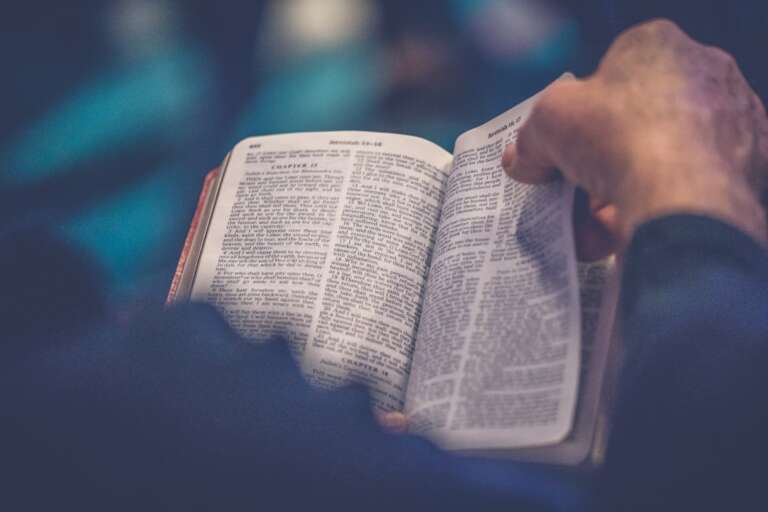
Opening a Bible for the first time – or the hundredth time after years of not reading it – can feel overwhelming. Where do you start? Genesis? The Gospels? The book that falls open randomly? And even when you do start reading, how do you move beyond surface-level familiarity toward genuine understanding that actually changes how you live?
Learning how to study the Bible effectively is one of the most valuable skills a Christian can develop. This guide is designed for beginners – no seminary degree required. Just an open Bible, an honest heart, and a willingness to show up. You will learn where to begin, a simple three-step method, how to choose a translation, which tools help, and how to build a habit that lasts.
Start with the Right Mindset
Before you open your Bible, understand what kind of book it is. The Bible is not a rulebook, a self-help guide, or a collection of moral stories. It is the living Word of God – “God-breathed,” as 2 Timothy 3:16 describes it – meaning it carries a unique authority and power that no other book has. The verse continues that Scripture is “useful for teaching, rebuking, correcting and training in righteousness.”
Hebrews 4:12 says the Word of God is alive and active, sharper than any double-edged sword. Approach it expecting to be taught, corrected, and transformed – not just informed. That expectation changes everything about how you read.
It also helps to remember that the Bible tells one big story. From creation to the fall, from the promises to Israel to the coming of Jesus, and from the birth of the church to the hope of new creation, every part points toward Christ. When you feel lost in a difficult passage, ask how it fits into that larger story of God rescuing and restoring his people.
Where to Start if You Are New
Do not start at Genesis 1 unless you plan to read the entire Bible cover to cover (a worthy goal, but a marathon, not a sprint for beginners). Instead:
Start with the Gospel of John. It is written specifically to help readers come to faith in Jesus (John 20:31) and gives you the clearest picture of who Jesus is and what he came to do. Read one chapter per day and ask simple questions: What does this tell me about Jesus? What does it tell me about people? What does it tell me about God? When you finish, our Gospel of John Bible study guide can walk you through it chapter by chapter.
Then move to Romans. Paul’s letter to the Romans is the most systematic explanation of the gospel in the New Testament. It will give you a theological framework for understanding the rest of the Bible.
Add the Psalms alongside whatever else you are reading. The Psalms cover the full range of human emotion and are a perfect companion for daily devotional reading – they teach you how to pray and how to bring your full, honest self to God.
After these, you can branch out. Many readers enjoy Genesis and Exodus for the foundations of God’s relationship with his people, Proverbs for practical wisdom, and the other Gospels to see Jesus from different angles. There is no single correct order. What matters is that you keep reading and keep asking questions.
Choose a Translation You Can Understand
A good translation is one you will actually read. Some translations aim for word-for-word accuracy, others for thought-for-thought readability, and many sit somewhere in between. The ESV and NASB lean toward literal wording, the NIV and CSB balance accuracy with readability, and the NLT is especially easy to read for newcomers.
You do not have to pick only one. Many people read primarily from one translation and compare a difficult verse in two or three others. You can browse and compare versions for free on BibleGateway. If you are unsure, begin with a readable translation and switch later as your confidence grows.
The Observe-Interpret-Apply Method
One of the most effective frameworks for Bible study is the three-step OIA method.
Observe: What does the text actually say? Read carefully and literally. Who is speaking? Who is the audience? What is the context? What words or phrases stand out? Do not try to apply the text before you have understood what it actually says.
Interpret: What does the text mean? What was the author intending to communicate to the original audience? Context is everything here. A text without a context is a pretext. Look at the surrounding passages, the book as a whole, and how other parts of Scripture address the same theme.
Apply: What does this mean for my life today? How should this passage change what I believe, how I act, or what I value? Application should be specific, not vague. “I should be more loving” is too general. “I will apologize to my colleague tomorrow for how I spoke to him” is an application.
James 1:22 reminds us, “Do not merely listen to the word, and so deceive yourselves. Do what it says.” Study that never reaches obedience falls short of its purpose. Try ending every session by writing one sentence beginning with “Today, because of this passage, I will…”
Read Each Passage in Its Context
The Bible is a library of different kinds of writing, and each kind is read a little differently. Narrative books such as Genesis or Acts tell what happened; they do not always tell you what should be copied. Poetry such as the Psalms uses vivid imagery and emotion. Wisdom literature such as Proverbs gives general principles for living well rather than guaranteed promises. The Gospels record the life and teaching of Jesus, and the letters, such as Romans or Philippians, explain and apply the gospel to real churches.
Before you study a passage, ask a few questions. What kind of writing is this? Who wrote it, and to whom? What comes just before and after it? Reading a single verse in isolation is the most common way to misunderstand it. If you plan to share a verse with others, our guide on how to quote a Bible verse shows how to cite Scripture clearly and accurately.
The Bereans are a good model. Acts 17:11 says they “received the message with great eagerness and examined the Scriptures every day to see if what Paul said was true.” Eager reception and careful examination belong together.
Use Good Tools Without Depending on Them
A good study Bible with notes is an excellent starting point. The ESV Study Bible and the NIV Study Bible are both well-regarded options for beginners. Bible commentaries – written explanations of biblical books by scholars – can be invaluable for difficult passages.
Apps like YouVersion, Logos, and Blue Letter Bible give you access to multiple translations, commentaries, and study tools for free on your phone. The ability to compare translations is especially helpful – seeing how different versions render a passage often illuminates the meaning.
That said, do not let tools replace direct engagement with the text. Read the passage yourself first, think about it, and form your own understanding before reaching for a commentary. The Holy Spirit is given to lead you into truth (John 16:13) – tools supplement that process, they do not replace it.
Pray Before and After You Read
Bible study is not only an intellectual exercise; it is a conversation with God. Begin with a short prayer asking him to open your eyes. Psalm 119:18 is a beautiful model: “Open my eyes that I may see wonderful things in your law.” Afterward, pray the passage back to God in your own words, thanking him for what you learned and asking for help to live it out.
As you grow, you may wonder how Scripture and God’s guidance fit together. Our article on how to hear God’s voice in your daily life explores how the Spirit works through the Word, prayer, and wise counsel. Remember too that Psalm 119:105 calls God’s word “a lamp for my feet, a light on my path” – it gives light for the next step, not always the whole road.
Build a Consistent Habit
Consistency matters more than intensity. Reading your Bible for ten minutes every day will produce more spiritual growth than reading for two hours once a week. The goal is a daily rhythm that is sustainable, not impressive.
Pick a specific time and place. Keep your Bible and a journal in that spot. When you sit down, start with a brief prayer asking God to open your eyes to what he wants to show you. Then read. Then reflect and write. Then pray your response.
If you want a gentle structure for your daily time, see how to start daily devotions as a beginner. Many people also find it helpful to read with a friend or join a small group, which adds accountability and fresh insight.
You will have days when the Bible feels dry and days when a single verse stops you in your tracks. Both are normal. Keep showing up. The transformation happens over time, not in a single sitting.
Common Mistakes to Avoid
A few pitfalls trip up many beginners. The first is reading only for comfort and skipping hard passages. The second is treating the Bible like a lucky dip, opening to a random page and expecting a personal message. The third is pulling verses out of context to support what you already believe. The fourth is giving up after missing a few days. If you miss a day, simply begin again tomorrow. Grace, not guilt, should shape your habit.
Paul urged Timothy, “Do your best to present yourself to God as one approved, a worker who does not need to be ashamed and who correctly handles the word of truth” (2 Timothy 2:15). Handling Scripture carefully is an act of reverence, and it is something every believer can learn.
Frequently Asked Questions About Studying the Bible
What is the best way to study the Bible for beginners?
Start with a readable translation and the Gospel of John. Read a short section daily, then use the Observe-Interpret-Apply method: note what the text says, consider what it meant to its original audience, and decide one specific way to respond. Pray before and after reading, and keep brief notes in a journal.
How long should a daily Bible study take?
Ten to twenty minutes is a healthy starting point. Consistency matters far more than length, so choose an amount you can keep up on busy days. You can always spend longer on weekends or when a passage captures your attention. A short, faithful daily habit will serve you better than occasional long sessions.
Which Bible translation is best for beginners?
The best translation is one you will read regularly and understand. The NIV, CSB, and NLT are popular for readability, while the ESV and NASB are more word-for-word. Try a few on a free site like BibleGateway, then choose one for daily reading and compare others when a passage feels unclear.
What should I do when I do not understand a passage?
Slow down and reread it in context, noting the book, author, and audience. Compare a second translation, check the notes in a study Bible, and consult a trusted commentary. Pray for understanding, and ask a pastor or mature believer. It is perfectly normal to leave some questions unanswered while you keep growing.
Final Thoughts
You do not need to be an expert to meet God in his Word. Begin small, stay curious, and trust the Holy Spirit to teach you over time. Open your Bible today, read a few verses slowly, and take one step of obedience. That is how to study the Bible well – one faithful day at a time.