The Sermon on the Mount is the most famous sermon ever preached. Found in Matthew 5-7, it is Jesus’s greatest extended teaching, a revolutionary picture of Kingdom living that upended human assumptions about power, success, and happiness. Two thousand years later, it still challenges and transforms every person who reads it.

In this guide we walk through the sermon section by section: the Beatitudes, salt and light, the deeper meaning of the law, Jesus’s teaching on prayer, money, and worry, and His closing call to build on the rock. Along the way we will see how each part applies to everyday life.
The Setting of the Sermon on the Mount
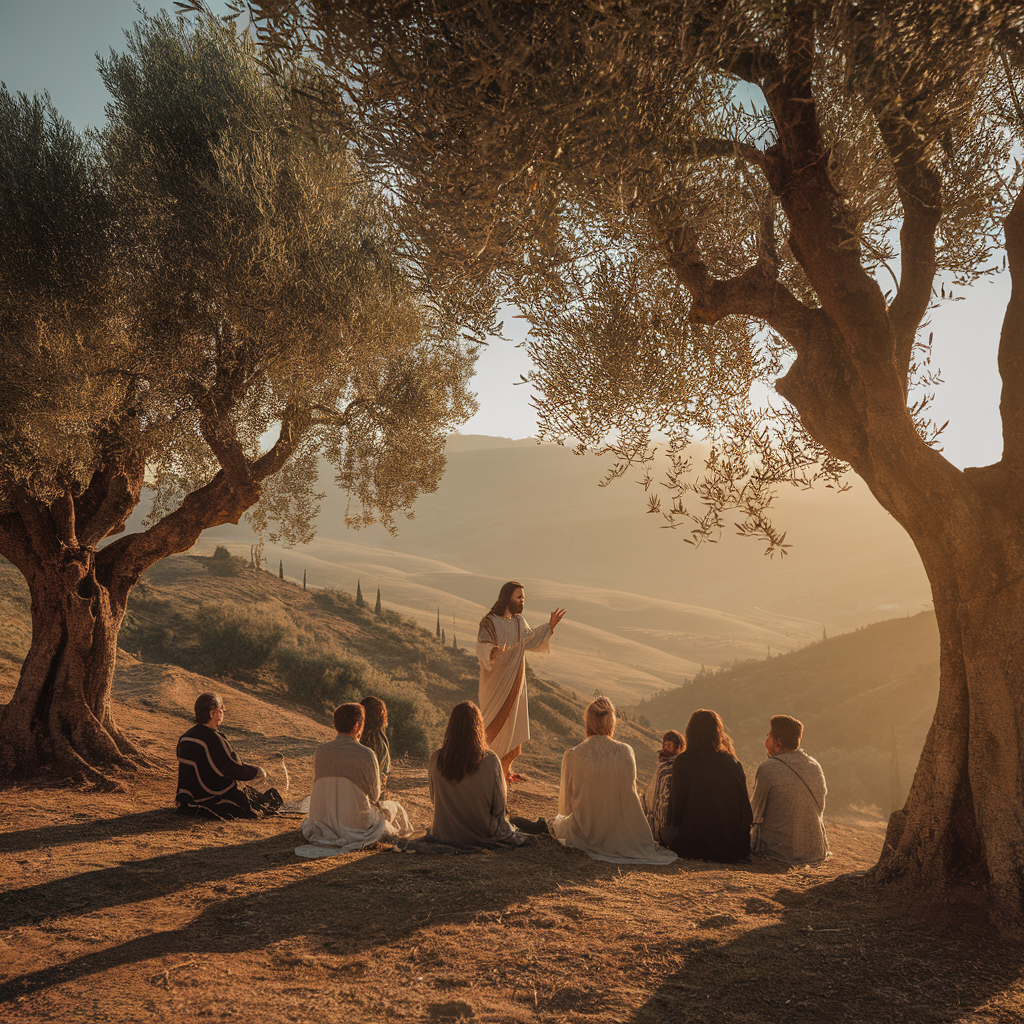
Matthew tells us that when Jesus saw the crowds, He went up on a mountainside, sat down, and His disciples came to Him (Matthew 5:1-2). Sitting was the customary posture of a rabbi teaching. The crowds were listening in, and when Jesus finished, Matthew notes that they were amazed because He taught “as one who had authority” (Matthew 7:28-29).
The sermon is not a list of rules for earning God’s favor. It describes the character of people who already belong to the Kingdom of heaven. Jesus opens with blessing before He gives a single command, which tells us that grace comes first and obedience flows from it. Read as a whole, Matthew 5-7 shows what life looks like when God is truly king of the heart.
The Beatitudes: Blessed Are the Unlikely
Jesus opens with the Beatitudes (Matthew 5:3-12), a series of surprising blessings for the poor in spirit, those who mourn, the meek, those who hunger and thirst for righteousness, the merciful, the pure in heart, the peacemakers, and the persecuted. Every one of them defies worldly wisdom. The Kingdom of God belongs not to the powerful and proud, but to those who know their need for God.
Notice the promises attached to each blessing: comfort for those who mourn, the earth for the meek, mercy for the merciful, and the sight of God for the pure in heart. These are not rewards earned by effort but gifts God gives to people whose hearts are open to Him. If you are weary or grieving today, the Beatitudes say that you are not overlooked by God. Our guide to encouraging Bible verses for when life is hard pairs well with this passage.
Salt and Light in the World
In Matthew 5:13-16, Jesus calls His followers the “salt of the earth” and the “light of the world.” We are not called to hide or blend in, but to preserve what is good and to illuminate what is dark. Salt works quietly and light works visibly, and both are meant to be used. A lamp is not lit to be placed under a bowl.
Our good works, Jesus says, should lead others to glorify our Father in heaven. The goal is never to draw attention to ourselves but to point beyond ourselves to God. Think of the small, everyday ways you can be salt and light this week: an honest word at work, a patient answer at home, a quiet act of kindness for a neighbor. For more on this theme, see how to live as a Christian in a secular world.
The Heart of the Law
Jesus is clear that He did not come to abolish the Law and the Prophets but to fulfill them (Matthew 5:17-20). He then repeatedly uses the phrase “You have heard that it was said … but I tell you,” taking the commandments deeper, from external behavior to internal motivation.
Anger is treated as serious in God’s sight, and Jesus urges His hearers to be reconciled with a brother or sister before bringing a gift to the altar (Matthew 5:21-26). Lust is taken as seriously as the act of adultery (Matthew 5:27-30). He calls for honest speech without elaborate oaths (Matthew 5:33-37), for generosity in place of retaliation (Matthew 5:38-42), and for love of enemies: “Love your enemies and pray for those who persecute you” (Matthew 5:44, NIV).
The section ends with a daunting call: “Be perfect, therefore, as your heavenly Father is perfect” (Matthew 5:48, NIV). The word points toward wholeness and maturity, and it drives us to our need for grace. The Kingdom of God asks for a transformation of the heart, not just a performance of rules. We cannot manage it by willpower alone, which is why understanding grace is so important for anyone who reads this sermon honestly.
Giving, Prayer, and Fasting
In Matthew 6:1-18 Jesus addresses three common religious practices: giving, prayer, and fasting. In each case He warns against doing them to be seen by others. Give quietly, pray in private, and fast without making a show. The Father who sees in secret will reward His children.
In the middle of this teaching Jesus gives the model we call the Lord’s Prayer (Matthew 6:9-13). It begins with God’s name and Kingdom before moving to our daily bread, forgiveness, and protection from evil. It is short, simple, and deep. Immediately afterward Jesus underlines forgiveness: if we forgive others, our heavenly Father will forgive us (Matthew 6:14-15). If that is a struggle for you, read how to forgive someone who hurt you. To build a steady prayer habit, our article on developing a consistent daily prayer life offers practical steps.
Treasure, Money, and Worry
Jesus next speaks about where we place our hearts. “For where your treasure is, there your heart will be also” (Matthew 6:21, NIV). He warns that no one can serve two masters, God and money (Matthew 6:24). Everything we own is a tool in His service, not a replacement for Him.
Then comes one of the most comforting passages in the Bible: “Therefore I tell you, do not worry about your life” (Matthew 6:25, NIV). Jesus points to the birds of the air and the flowers of the field, reminding us that the Father who feeds and clothes them cares even more for us. He concludes, “But seek first his kingdom and his righteousness, and all these things will be given to you as well” (Matthew 6:33, NIV). If anxiety weighs on you, you may find help in what the Bible says about fear.
Judging, Asking, and the Golden Rule
Matthew 7:1-12 begins with a call to humility: do not judge hypocritically, but first remove the plank from your own eye. It continues with an invitation to prayer: “Ask and it will be given to you; seek and you will find; knock and the door will be opened to you” (Matthew 7:7, NIV). God is a good Father who gives good gifts to His children.
The section closes with the Golden Rule: “So in everything, do to others what you would have them do to you, for this sums up the Law and the Prophets” (Matthew 7:12, NIV). It is simple to remember and a lifetime to practice.
The Narrow Gate and Two Foundations
Jesus ends the sermon with a call to decision. He speaks of the narrow gate and the wide one (Matthew 7:13-14), warns about false prophets who can be known by their fruit (Matthew 7:15-20), and cautions that calling Him Lord is not enough without doing the will of the Father (Matthew 7:21-23).
His closing picture is unforgettable. A wise person builds a house on the rock, and when the rain and floods come it stands. A foolish person builds on sand, and the house falls with a great crash (Matthew 7:24-27). The difference is not hearing but obeying. Obedience is not perfect performance; it is a life built on trust in Jesus and His words. Consider reading the passage yourself on BibleGateway, and spend a few weeks in it. For a wider introduction to His teaching, see the famous parables of Jesus.
Quick Faith Quiz
How many Beatitudes does Jesus give in Matthew 5?
- A. 5
- B. 7
- C. 8
- D. 10
Reveal the answer
C — 8 Beatitudes in Matthew 5:3-10, plus a ninth expanded blessing for the persecuted in v.11-12.
Frequently Asked Questions
Where is the Sermon on the Mount in the Bible?
The Sermon on the Mount is found in Matthew chapters 5, 6, and 7. It begins with the Beatitudes and ends with the parable of the wise and foolish builders. A shorter parallel teaching, often called the Sermon on the Plain, appears in Luke 6:17-49, with several similar sayings of Jesus.
What is the main message of the Sermon on the Mount?
The main message is that life in God’s Kingdom starts with the heart. Jesus teaches humility, mercy, purity, love for enemies, trust in the Father, and obedience to His words. It describes the character of His followers and shows that outward religion without inward transformation is not enough.
What are the Beatitudes?
The Beatitudes are the opening blessings of the Sermon on the Mount, found in Matthew 5:3-12. Each begins with “Blessed are” and describes a kind of person, such as the poor in spirit, the meek, or the peacemakers, who receives God’s favor and a promise from Him in His Kingdom.
How can I apply the Sermon on the Mount today?
Choose one teaching at a time and put it into practice. You might forgive someone, pray the Lord’s Prayer slowly each morning, give quietly, or turn a worry into a prayer. Ask the Holy Spirit for help, since Jesus never expected us to live this way in our own strength.
Lord Jesus, let the words of Your greatest sermon sink deep into our hearts. May we live as salt and light wherever You have placed us. Amen.
About the author: everydayinchrist.com writes devotional and Bible study content at Everyday in Christ to help readers grow in everyday faith.